
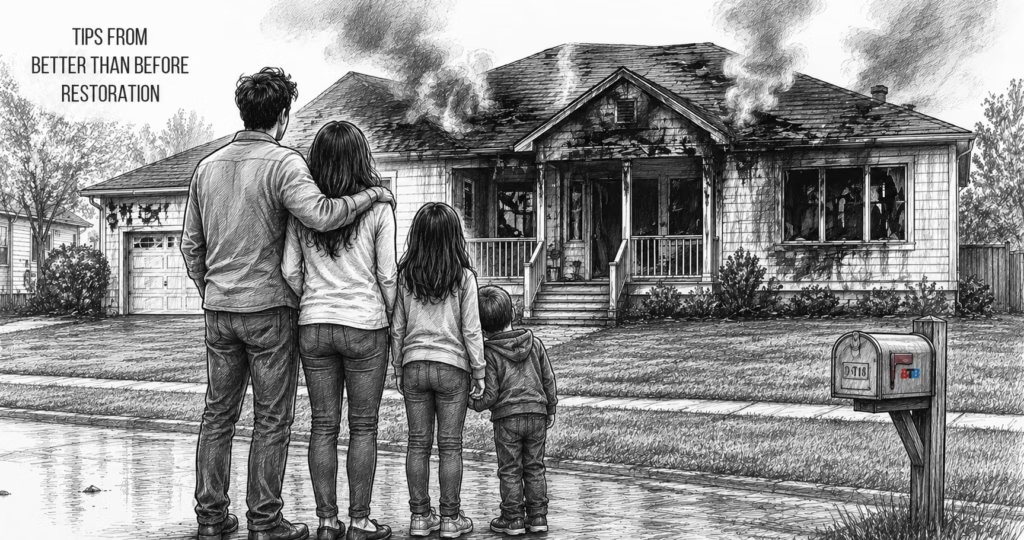
There’s no version of this that isn’t hard. If you’re searching for what to do after a house fire, you’re probably standing in the middle of it right now, and a fire takes more than walls and belongings. It takes the sense of safety a home is supposed to give you, and that loss is real even before you get to the practical questions of what happens next. Take a breath. You don’t have to figure all of this out today, and you don’t have to figure it out alone.
Right now: make sure everyone is safe and the fire department has confirmed the structure is secure before you go back in. Don’t re-enter until you’re told it’s safe, even if it’s your home and everything in you wants to check on it.
In the first few days: contact your insurance company to open the claim and get a claim number. This starts the clock on your coverage and any temporary living expenses you may be entitled to. Take photos of everything before anything is touched, moved, or cleaned, even if it’s painful to look at. Don’t attempt to clean soot or smoke damage yourself; it can grind residue deeper into surfaces and make it harder to restore later. If you need temporary housing, ask your insurance company about Additional Living Expense (ALE) coverage. Many policies include it, and most homeowners don’t know to ask.
In the weeks that follow: this is where having someone who understands both the construction and the claim side matters most. An adjuster will assess cause, scope, and documentation. Smoke and soot often travel far beyond the room where the fire started, into HVAC systems, wall cavities, closets you wouldn’t think to check. Damage that isn’t identified early is much harder to add to a claim later. This is the phase where we step in, and where our experience on the insurance side of this business gets to work for you instead of against you.
A few things worth knowing:
- You’re allowed to take your time with big decisions. Insurance companies move on their own timeline, but you don’t have to rush yours on things that aren’t urgent.
- Save every receipt tied to displacement: hotel stays, meals, anything you had to buy because you couldn’t be in your home. These add up, and they’re often reimbursable.
- If something feels off about how your claim is being handled, it’s okay to ask questions or get a second opinion. You’re not being difficult. You’re advocating for your own home.
Why this matters: the difference between a fire that’s fully restored and one that leaves lingering problems, like smoke odor that never quite goes away or a corner of the claim that got missed, almost always comes down to how thoroughly the damage was documented and understood from the start.
Where we come in: we’ve sat on the adjusting side of a fire claim and the construction side of a fire rebuild, which means we know what your insurance company is looking for and what your home actually needs, not just one or the other. You will hear from us throughout the process, not just at the beginning and the end. That’s not a promise we make lightly. It’s the reason people trust us with the hardest kind of loss there is.
You’ve already been through the worst part. Let us help make everything after it feel a little more like you’re not doing this alone.
Not sure where to start? We’ll walk you through it. Call us before you make any big decisions – we’ll tell you honestly what to expect, and what your insurance company is likely to ask for.
(256) 740-FIRE