
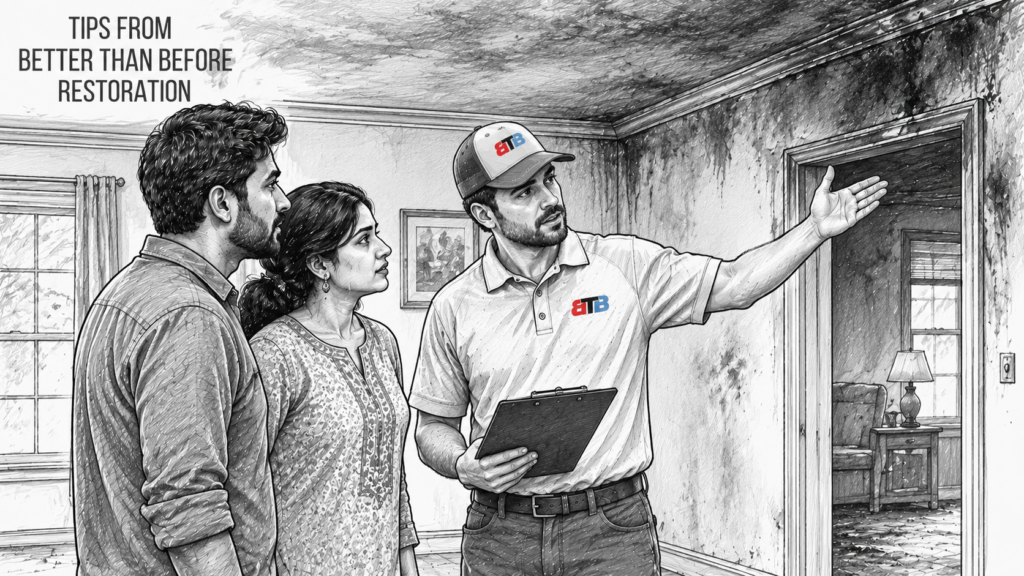
With the weather cooling down and fireplaces or heating furnaces being turned back on for the first time in a while, chances of a fire are real. When a fire happens inside your home, it’s natural to focus on the room where the flames were. Maybe the living room was damaged, a bedroom was affected, or the fire was contained to one area of the house.
But here’s something many homeowners don’t realize: smoke and soot can travel much farther than the fire itself.
Even rooms that never saw a flame can have smoke residue, lingering odors, and damage that isn’t immediately obvious. That’s why it’s important to look beyond the area that burned when evaluating fire damage.
Right now:
Don’t assume the rest of your home is unaffected. Once the fire department has confirmed that it’s safe to enter, pay attention to areas beyond the room where the fire started.
Look for soot or discoloration on walls, ceilings, furniture, and other surfaces. Notice whether you smell smoke in hallways, bedrooms, closets, or other areas of the home.
Don’t attempt to wipe down surfaces or clean soot yourself. Depending on the material and type of residue, improper cleaning can spread contamination or push soot further into surfaces.
What homeowners often miss:
Smoke doesn’t stay in one room. As smoke moves through a home, it can travel through doorways, hallways, air returns, HVAC systems, and other openings. It can also settle in areas that homeowners might never think to check.
This means damage can show up in places such as:
- Bedrooms and closets: Smoke can travel into rooms that are separated from the original fire area, leaving residue on walls, ceilings, clothing, and other belongings.
- HVAC systems: Smoke and soot can enter air returns and ductwork, potentially spreading contamination to other parts of the home.
- Attics and wall cavities: Smoke can move through openings and concealed spaces, making some damage difficult to identify during a quick visual inspection.
- Furniture and personal belongings: Upholstery, fabrics, and other porous materials can absorb smoke and retain odors even when they don’t appear visibly damaged.
A home can look relatively clean in one area and still have smoke-related damage elsewhere.
Why smoke odor can linger:
Getting rid of the smell isn’t always as simple as cleaning what you can see. Smoke residue can settle on surfaces and penetrate porous materials. Odors may remain in carpeting, insulation, drywall, cabinets, and other materials even after the visible soot has been removed.
Covering the smell with air fresheners or applying a coat of paint doesn’t necessarily address the source.
Proper smoke remediation involves identifying where the smoke traveled, determining which materials are affected, and using the appropriate cleaning, treatment, or replacement methods.
A few things worth knowing:
- The size of the fire doesn’t tell the whole story. A relatively small fire can produce smoke that affects multiple rooms.
- Visible soot isn’t the only sign of damage. Smoke odor and residue may be present even when surfaces look clean.
- Your HVAC system deserves attention. Don’t assume the ductwork is unaffected simply because the fire didn’t occur near a vent.
- Document what you notice. Take photos of visible residue and make note of any rooms where you detect smoke odor. Share those observations during the inspection.
- Don’t rush into cleaning or repairs. Have the affected areas properly evaluated and documented before disturbing potentially damaged materials.
Where we come in:
At Better Than Before Restoration, we understand that a fire damage inspection needs to look beyond the room where the flames occurred. Our team evaluates the affected areas, looks for smoke and soot damage that may not be immediately obvious, and prepares detailed estimates to help establish the work your home needs.
We also understand the insurance side of the process. Properly identifying and documenting smoke damage throughout the home helps ensure that affected areas are considered as part of the overall claim. Coverage ultimately depends on your policy and the circumstances of the loss, but damage shouldn’t be overlooked simply because it happened outside the room where the fire started.
Our goal is to help you understand the full picture, work with your adjuster, and restore your home properly.
Just because the fire was contained to one room doesn’t mean the damage was. Before assuming the rest of your home is fine, make sure it gets the attention it deserves.
Not sure where to start? We’ll walk you through it. Call us before you make any big decisions – we’ll tell you honestly what to expect, and what your insurance company is likely to ask for.
(256) 740-FIRE