
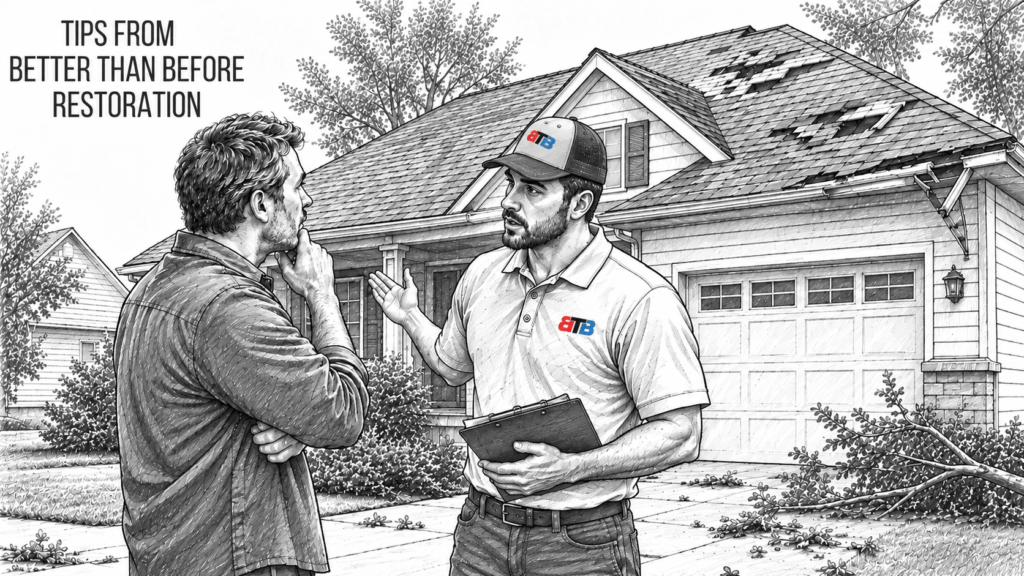
After a major storm, it is tempting to call your insurance company right away. You may have missing shingles, damaged siding, fallen branches, or water coming into your home. You want to get it fixed, and you want to know what your insurance will cover.
But before you file a claim, it helps to understand what the damage will actually cost to repair, how your deductible applies, and whether filing makes financial sense for your situation.
Not every storm requires an insurance claim. The goal is to understand what happened to your home and make an informed decision before taking the next step.
Right now:
Look for visible damage, but don’t climb onto your roof. From the ground, check for missing shingles, damaged gutters, fallen limbs, broken windows, or other obvious signs of damage. If you notice water entering the home, take reasonable steps to protect the property, provided it is safe to do so.
Take photos of anything you find, including debris and damage around the property. If you suspect structural damage or see downed power lines, keep your distance and contact the appropriate professionals.
Before filing a claim:
Find out what the damage will cost to repair. Your homeowners insurance deductible is the amount you are responsible for paying before your coverage applies. If the cost of repairs is close to or below your deductible, filing a claim may not provide a financial benefit.
For example, if repairs are estimated at $2,000 and your deductible is $2,500, you would generally be responsible for the repair cost under that deductible. If the damage is more extensive, the numbers may look very different.
It is also worth reviewing your policy and speaking with your insurance agent about how a claim could affect your coverage or premiums. The answer can depend on your policy, your claims history, and your insurer.
What homeowners often miss:
Not all storm damage is visible from the ground. Wind can lift shingles or compromise roofing materials without leaving obvious signs. Hail can damage roofing, gutters, siding, and other components in ways that are difficult to identify without a closer inspection.
At the same time, not every mark or imperfection is storm damage. Normal wear, aging materials, and preexisting conditions can complicate a claim.
Understanding the difference between cosmetic issues, functional damage, and normal wear is important. A thorough inspection helps establish what happened, what needs repair, and whether the estimated cost justifies moving forward with a claim.
A few things worth knowing:
- Your deductible matters. Compare the likely repair cost with your deductible before assuming insurance will cover the work.
- Document the damage early. Take photos before cleanup or repairs change the condition of the property.
- Don’t delay necessary protection. Most policies require reasonable steps to prevent further damage. Temporary measures, such as tarping a damaged roof, may be necessary while you arrange an inspection.
- Ask questions before making big decisions. You can speak with your insurance agent and have the damage inspected before deciding how to proceed. An inspection does not guarantee coverage, but it can help you make a more informed decision.
Where we come in:
At Better Than Before Restoration, we understand both the construction side of storm damage and the insurance side of the claim. Our team evaluates the damage, documents what we find, and prepares detailed repair estimates to help establish the work your home needs.
We also understand that filing a claim is not always the right choice. If the damage does not appear to justify a claim, we will tell you honestly. If it does, we can help you understand the next steps, communicate with your adjuster, and navigate the restoration process.
You shouldn’t have to guess about the condition of your home or make a major financial decision based on what you can see from the driveway.
Before you file, get the facts. A little clarity upfront can help you make a better decision for your home and your finances.
Not sure where to start? We’ll walk you through it. Call us before you make any big decisions – we’ll tell you honestly what to expect, and what your insurance company is likely to ask for.
(256) 740-FIRE